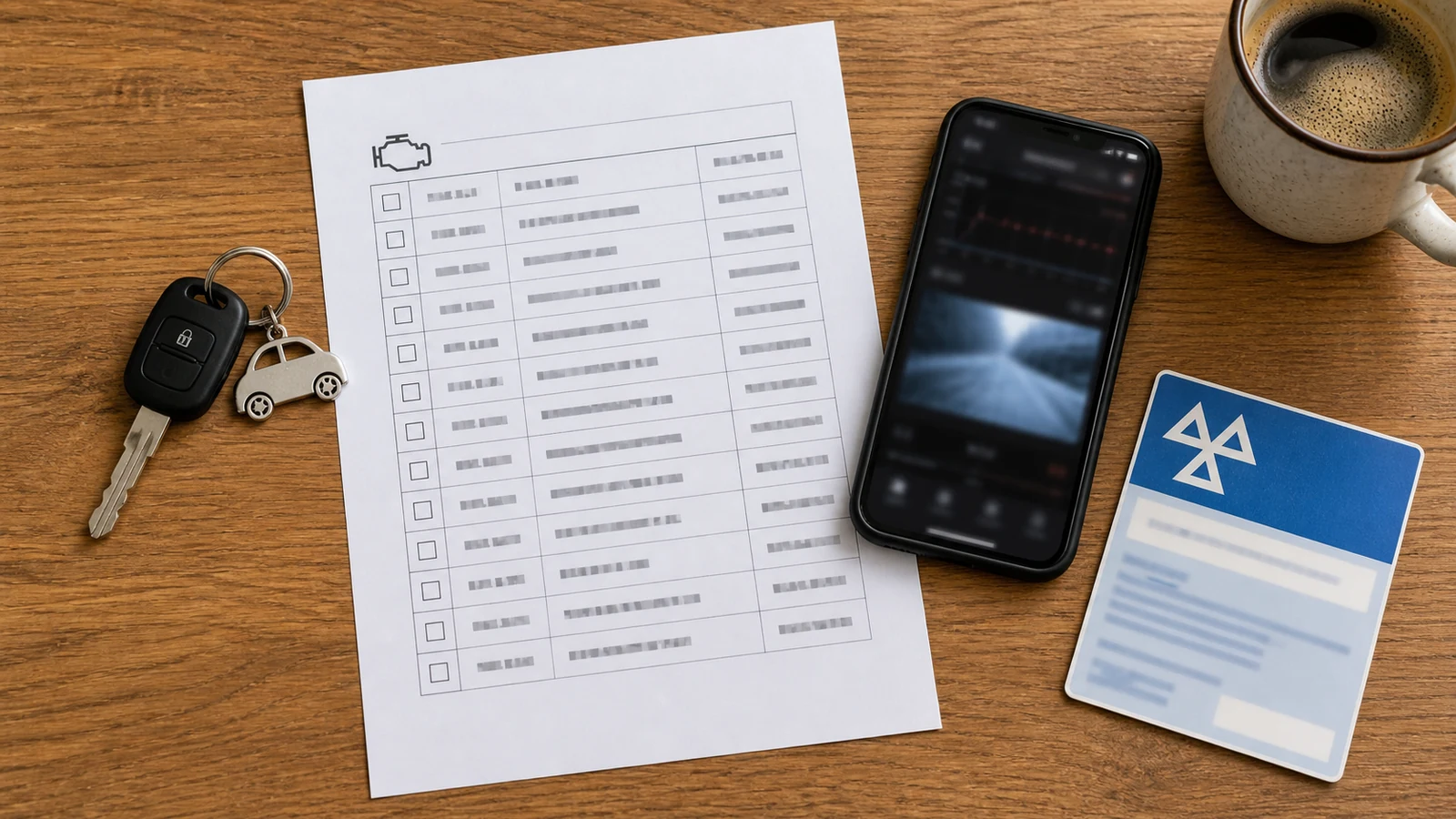
What to Take to the Garage After a DIY OBD Scan
Direct answer: take a one-page evidence pack: stored and pending fault codes, freeze-frame screenshots, readiness status, mileage, the exact symptom, when it happens, photos of warning lights, and any previous invoices or messages. Do not clear the codes before saving this.
The one-page evidence pack
| Item | Why the garage needs it |
|---|---|
| Stored codes | Shows what the ECU has confirmed |
| Pending codes | Shows faults that may be developing but not yet confirmed |
| Freeze-frame | Shows conditions such as speed, load or temperature when the code set |
| Readiness status | Shows whether emissions self-checks have completed since a reset |
| Mileage and date | Links the fault to the timeline |
| Symptom notes | Turns a code into a real-world complaint the technician can reproduce |
Before you clear anything
Clearing codes before the garage sees the car can remove useful context. If the light returned after a previous repair, the timeline is especially important: invoice date, mileage when repaired, mileage when the warning returned, and whether the same code came back.
Professional diagnostic guidance from Wheelbase Garage explains why context such as freeze-frame and live data matters; see its professional diagnostics guide.
Questions to ask when booking
- Will the diagnostic fee and findings be written on the job card?
- Will you record the fault-code numbers, not just say 'engine light'?
- If more diagnosis is needed, will you call before exceeding the agreed cap?
- If you repair it, how will you confirm the fault is gone?
- If the same light returns, what should I bring back?
Why a paper trail helps
If a repair does not fix the car, UK consumer dispute guidance focuses on records, not memory. The Motor Ombudsman advises keeping evidence such as invoices, estimates, diagnostic reports, job cards, photos and written communications in its step-by-step guide for cars not fixed after repair.
The same organisation's knowledge base also explains why it is usually sensible to give the original garage a chance to inspect and put things right, while keeping written evidence; see its garage has not fixed the problem guidance.
After the repair: verify, do not argue from memory
When collecting the car, ask what code was found, what test confirmed the part or repair, and what evidence shows the fault is no longer present. After normal driving, rescan and compare: same code, new code, pending only, or clear. If something returns, send the garage the scan date, mileage and symptom note calmly.
Next step if you want repeatable records
If your aim is to keep screenshots and code notes before garage visits, check whether a dedicated scanner fits your vehicle and phone on the TOPDON CarPal product page. Treat the scan as supporting evidence, not as a formal independent engineer's report.